🔺 Patient Assessment Triangle (PAT)
Rapid Across-the-Room Assessment · 4 P's · 3 A's · 2 T's · Tracking vs Non-Tracking | The Firefighter Medic
Patient Assessment Triangle — Overview
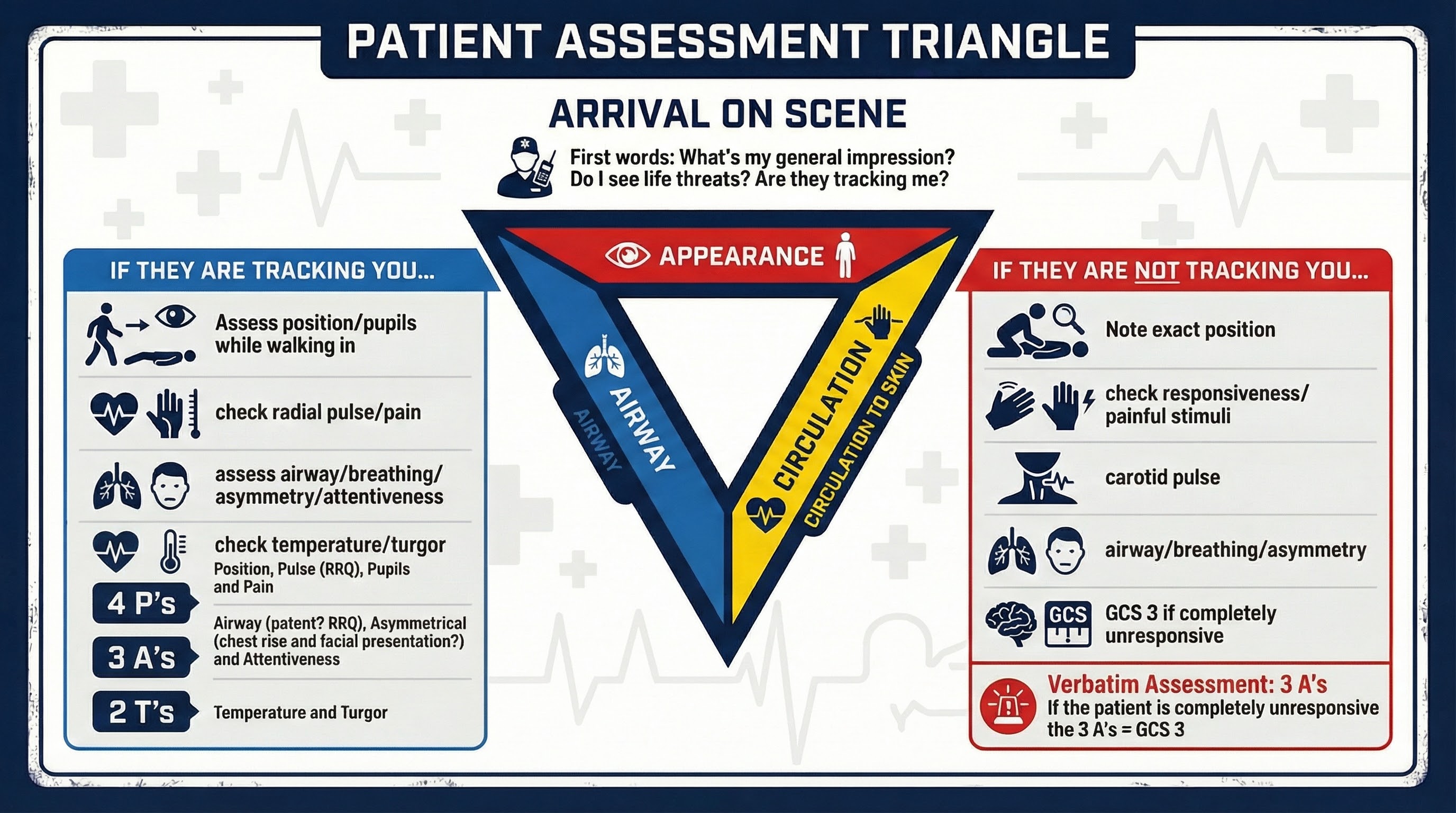
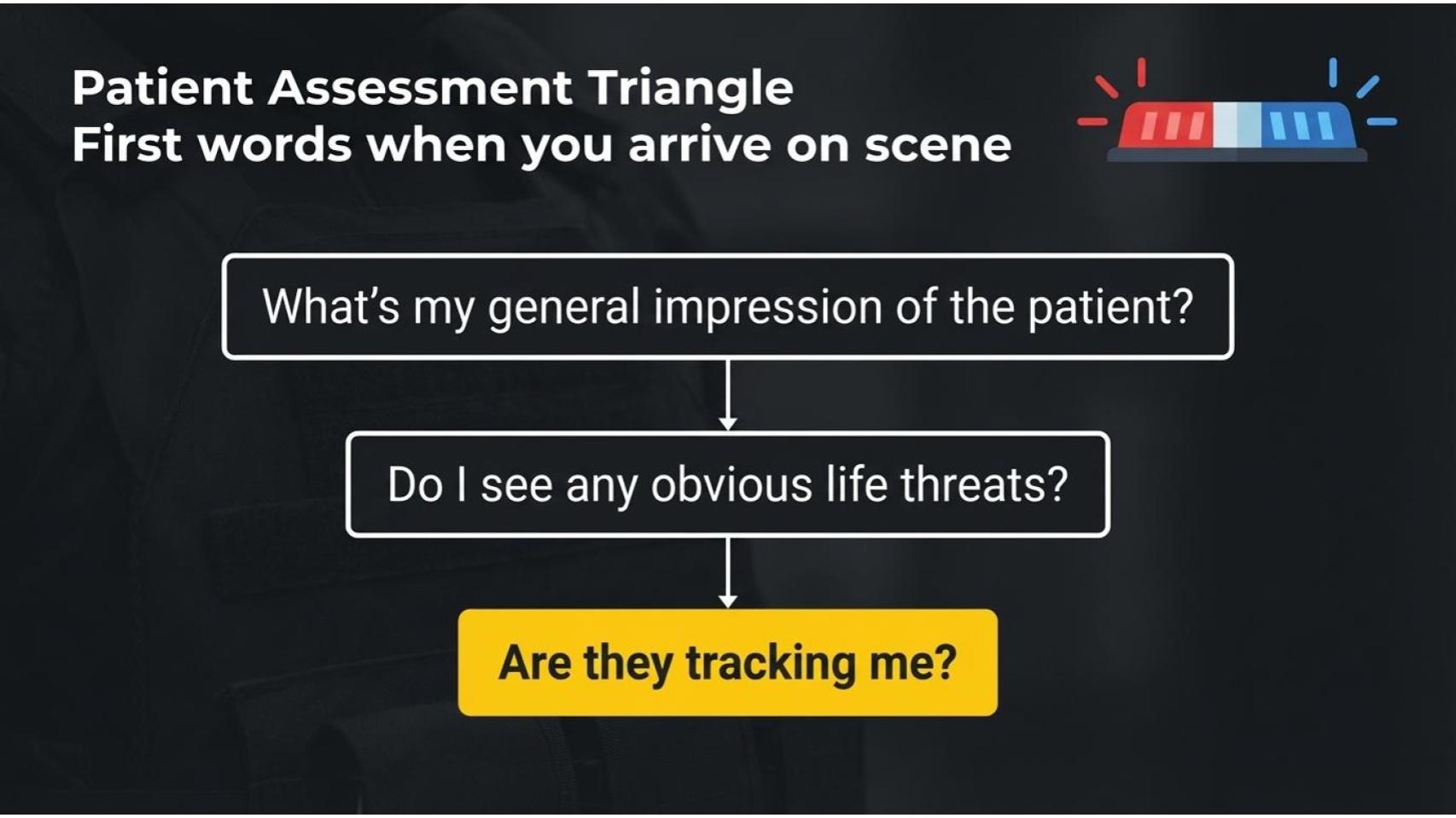
The PAT gives you a general impression in seconds — before you reach the patient. Three corners of the triangle = three things you assess simultaneously from across the room.
📍 First words on arrival: "What's my general impression? Do I see life threats? Are they tracking me?"
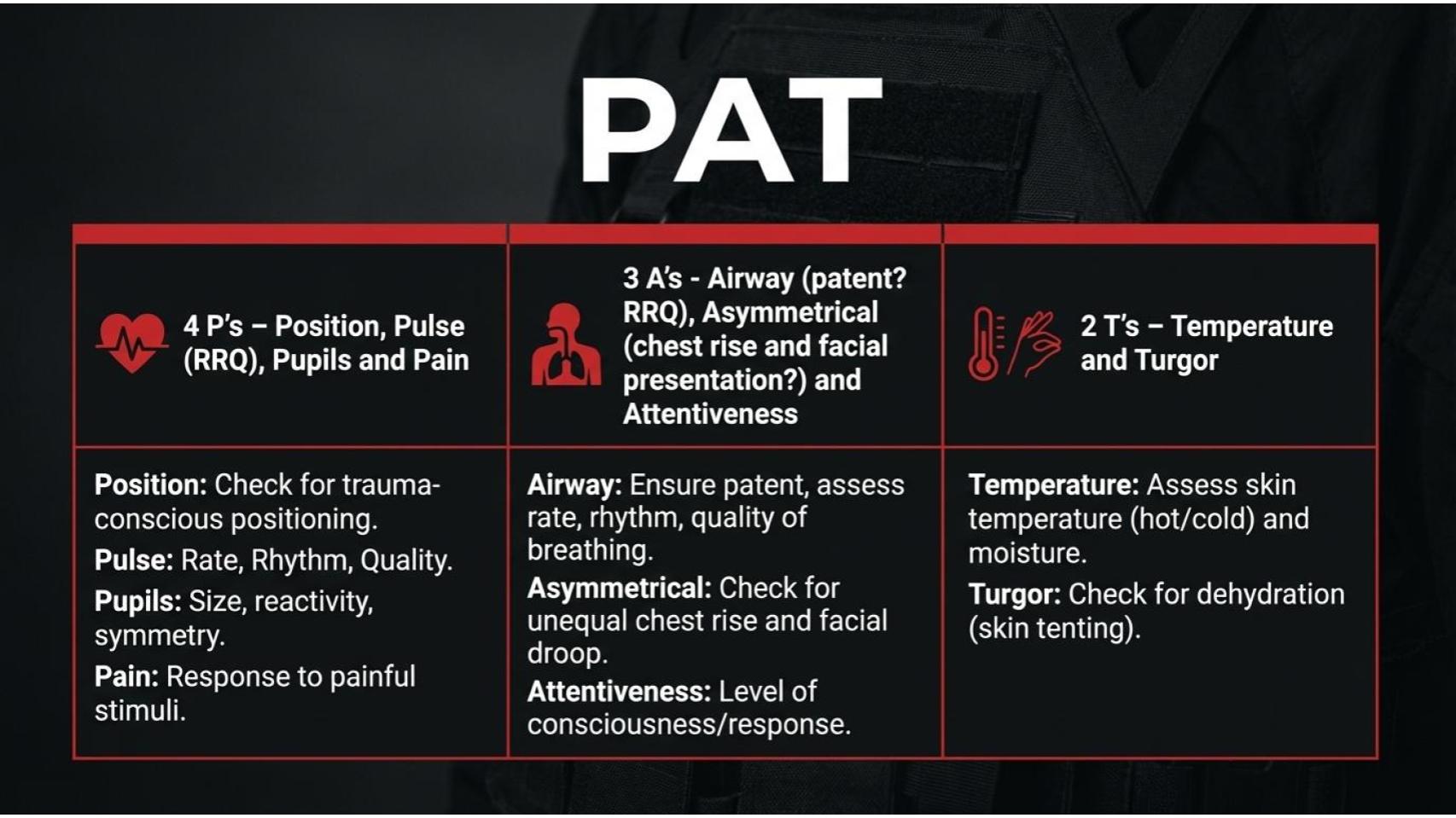
The Framework: 4 P's · 3 A's · 2 T's
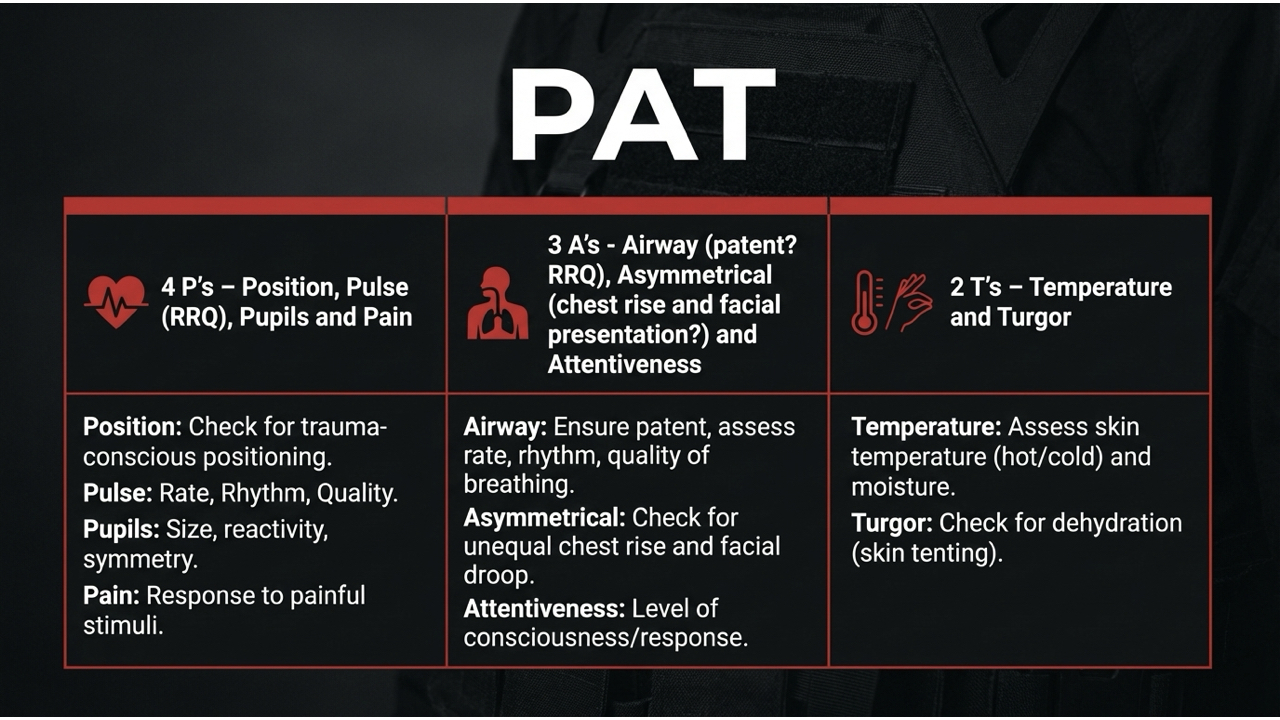
❤️ 4 P's — Perfusion
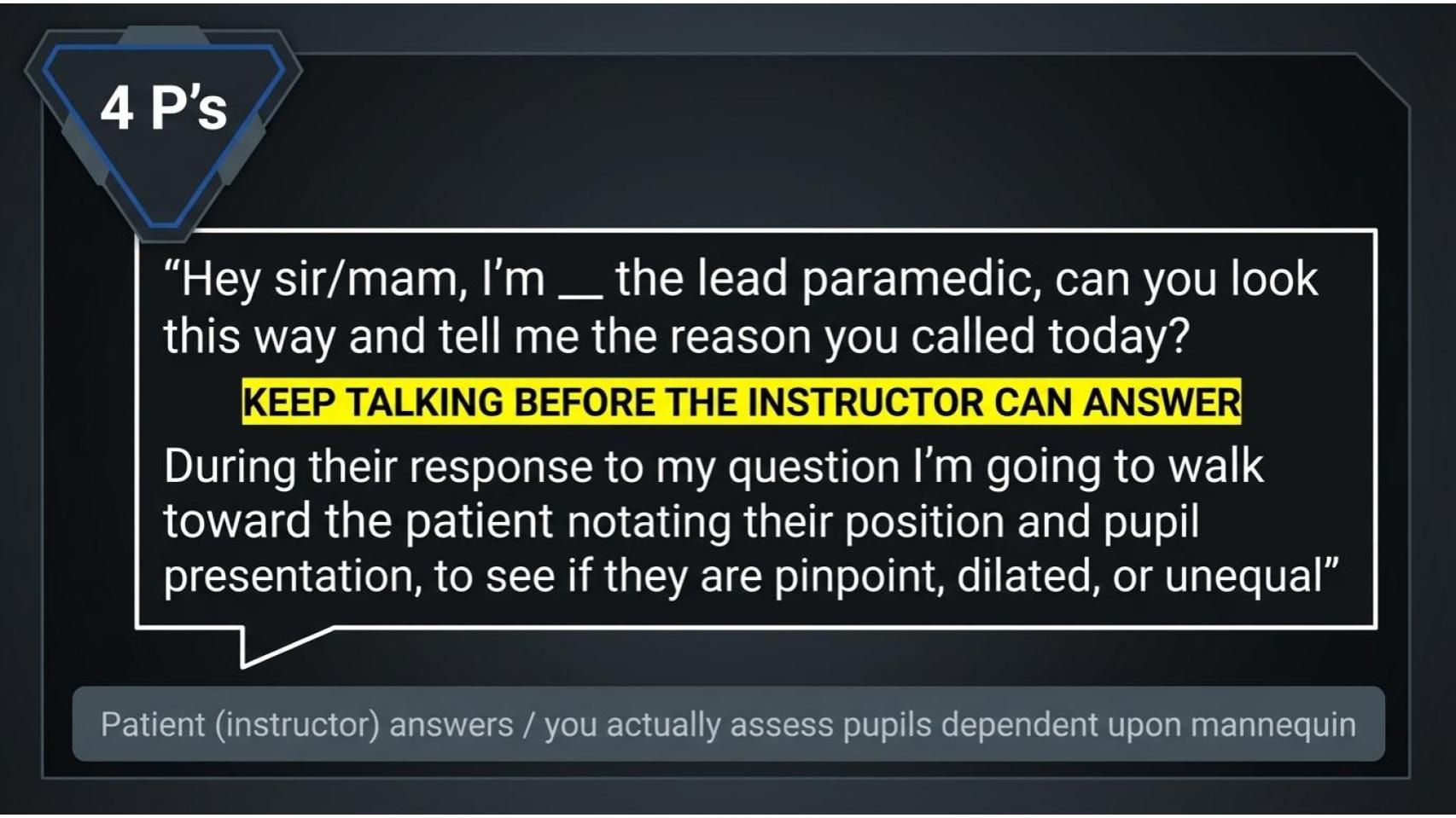
- Position — Check for trauma; is it a conscious positioning choice?
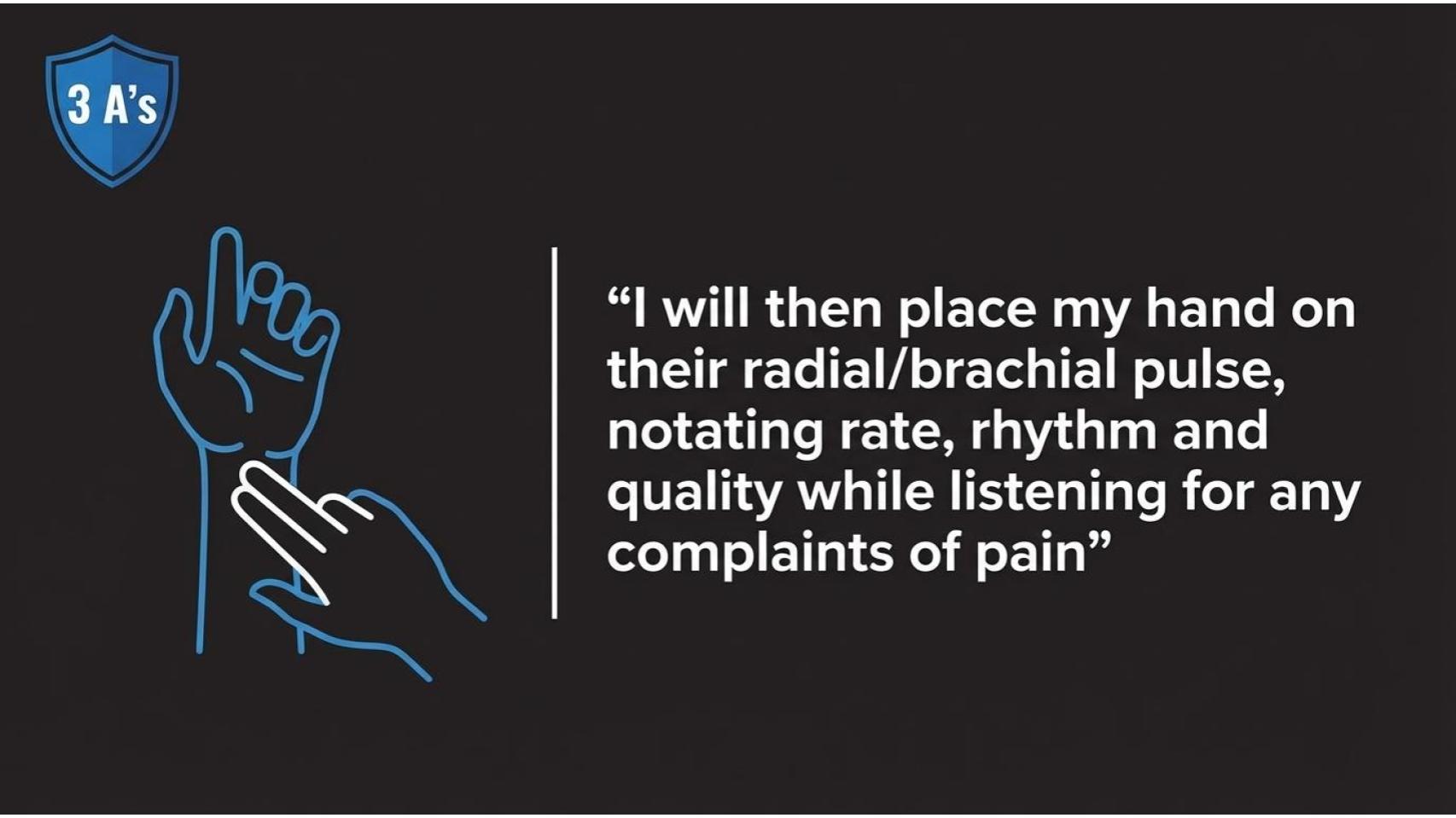
- Pulse — Rate, Rhythm, Quality (RRQ)
- Pupils — Size, reactivity, symmetry
- Pain — Response to painful stimuli
🫁 3 A's — Airway/Breathing
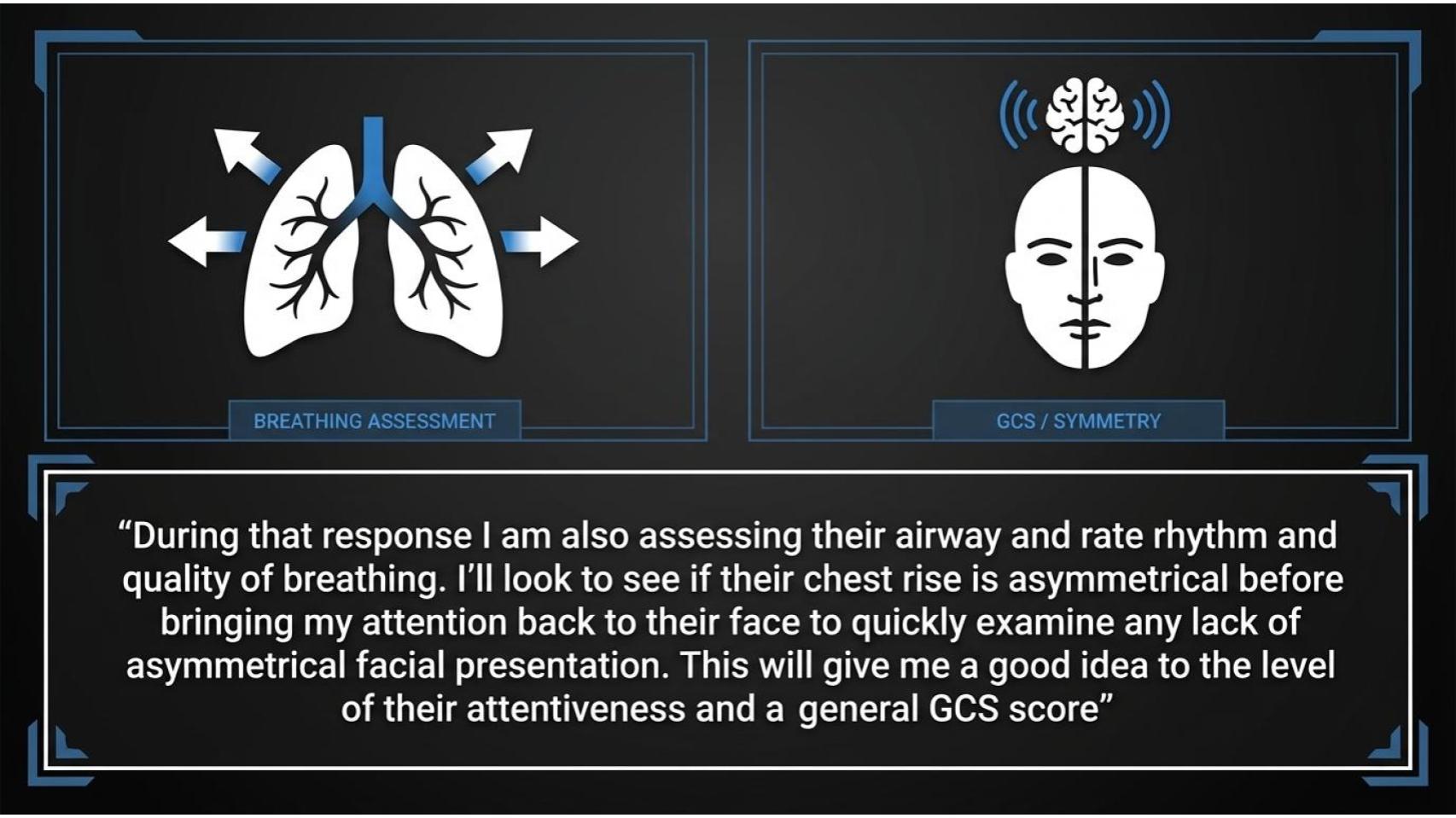
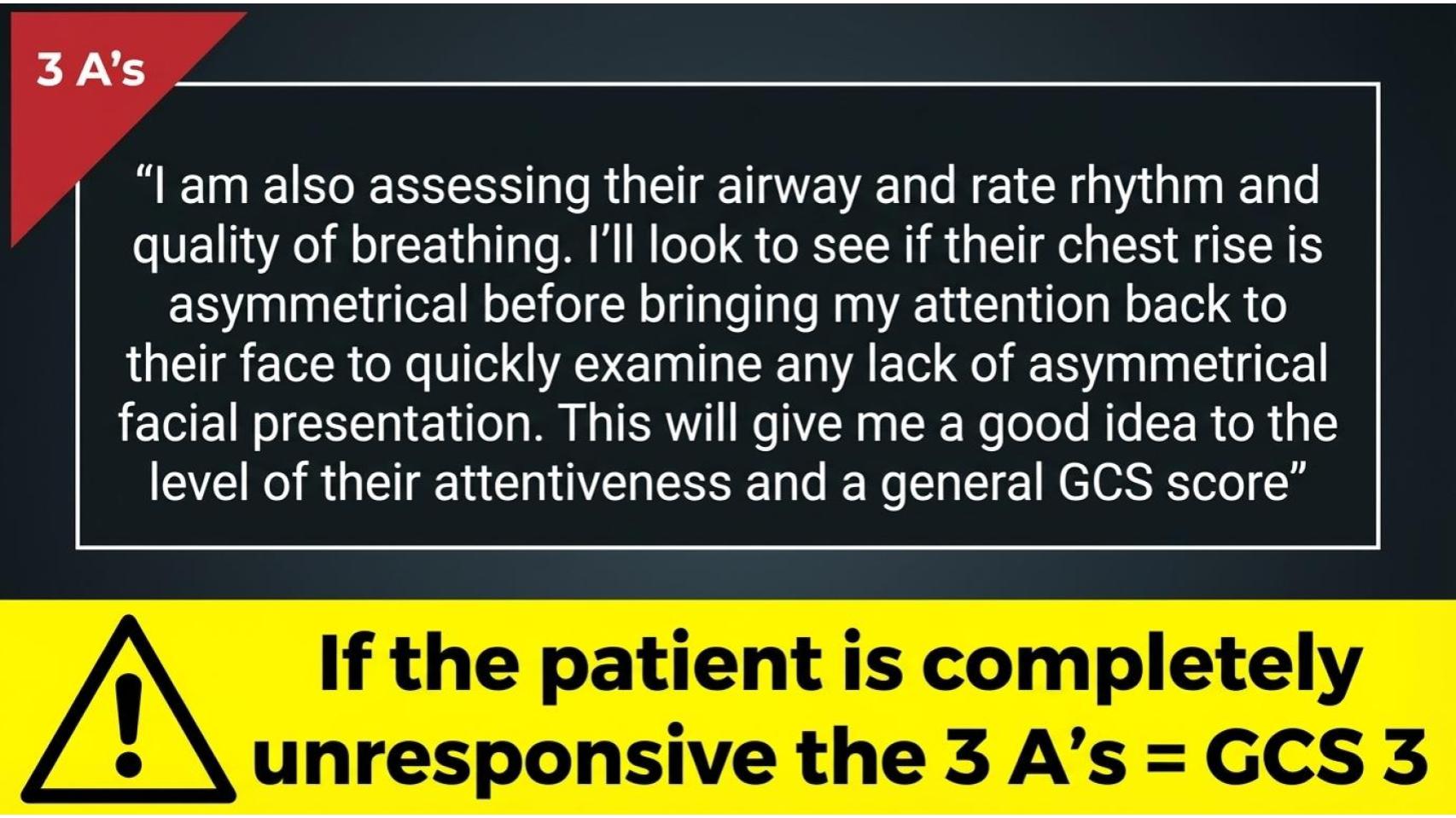
- Airway — Patent? Rate/Rhythm/Quality of breathing (RRQ)
- Asymmetrical — Unequal chest rise? Facial droop?
- Attentiveness — Level of consciousness/response
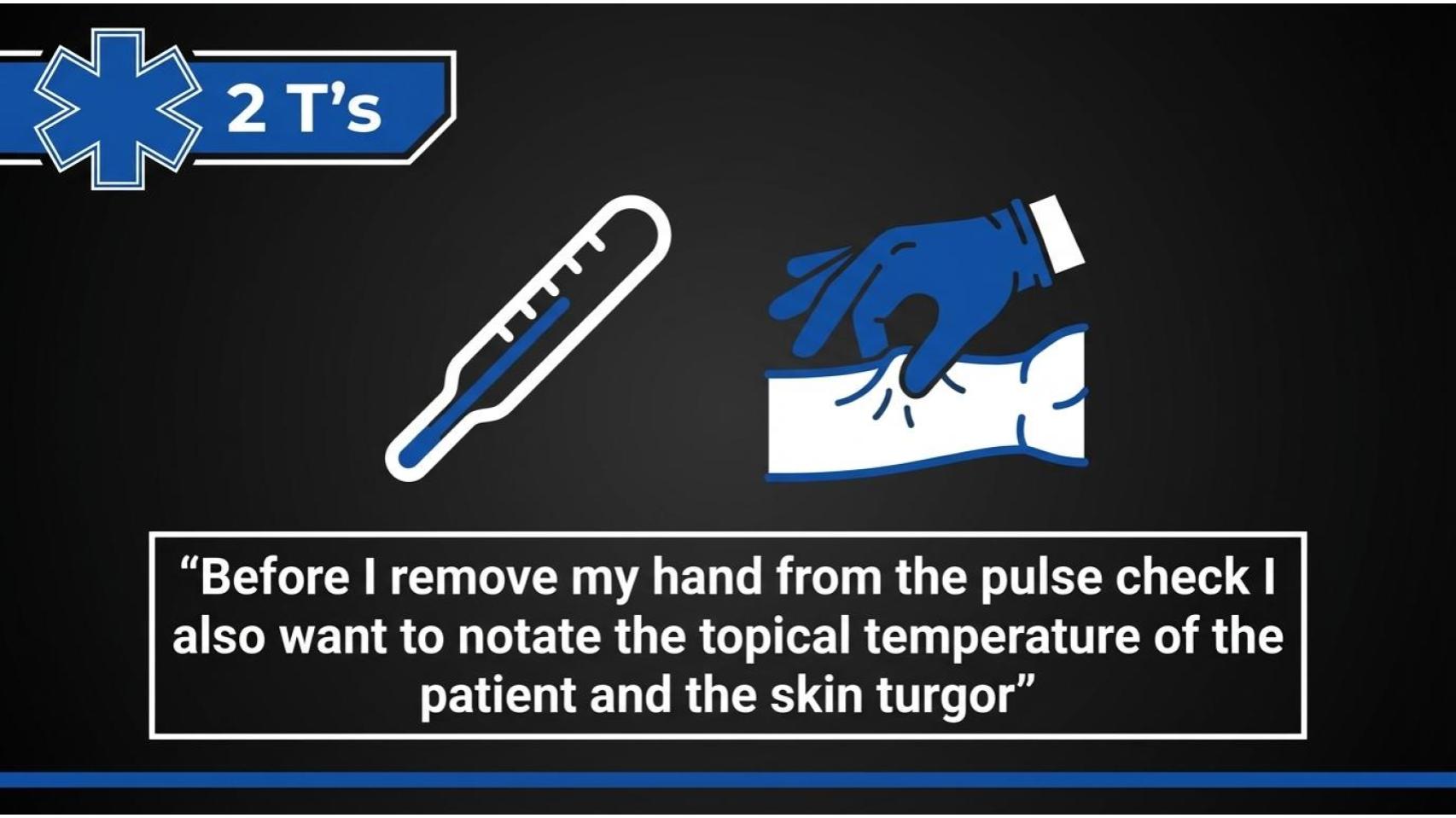
🌡️ 2 T's — Skin
- Temperature — Hot/cold/cool; dry or diaphoretic
- Turgor — Skin tenting = dehydration
4 P's → Position · Pulse (RRQ) · Pupils · Pain
3 A's → Airway (RRQ) · Asymmetrical · Attentiveness
2 T's → Temperature · Turgor
🔑 Tracking vs. Not Tracking
The first question across the room: Are they tracking me? — this determines your entire approach.
✅ IF THEY ARE TRACKING YOU...
- Assess position and pupils while walking in
- Check radial pulse (RRQ) while approaching
- Note pain response
- Assess airway/breathing and chest rise symmetry
- Check attentiveness (following your movement)
- Assess skin temperature and turgor on arrival
- Run through full 4 P's → 3 A's → 2 T's
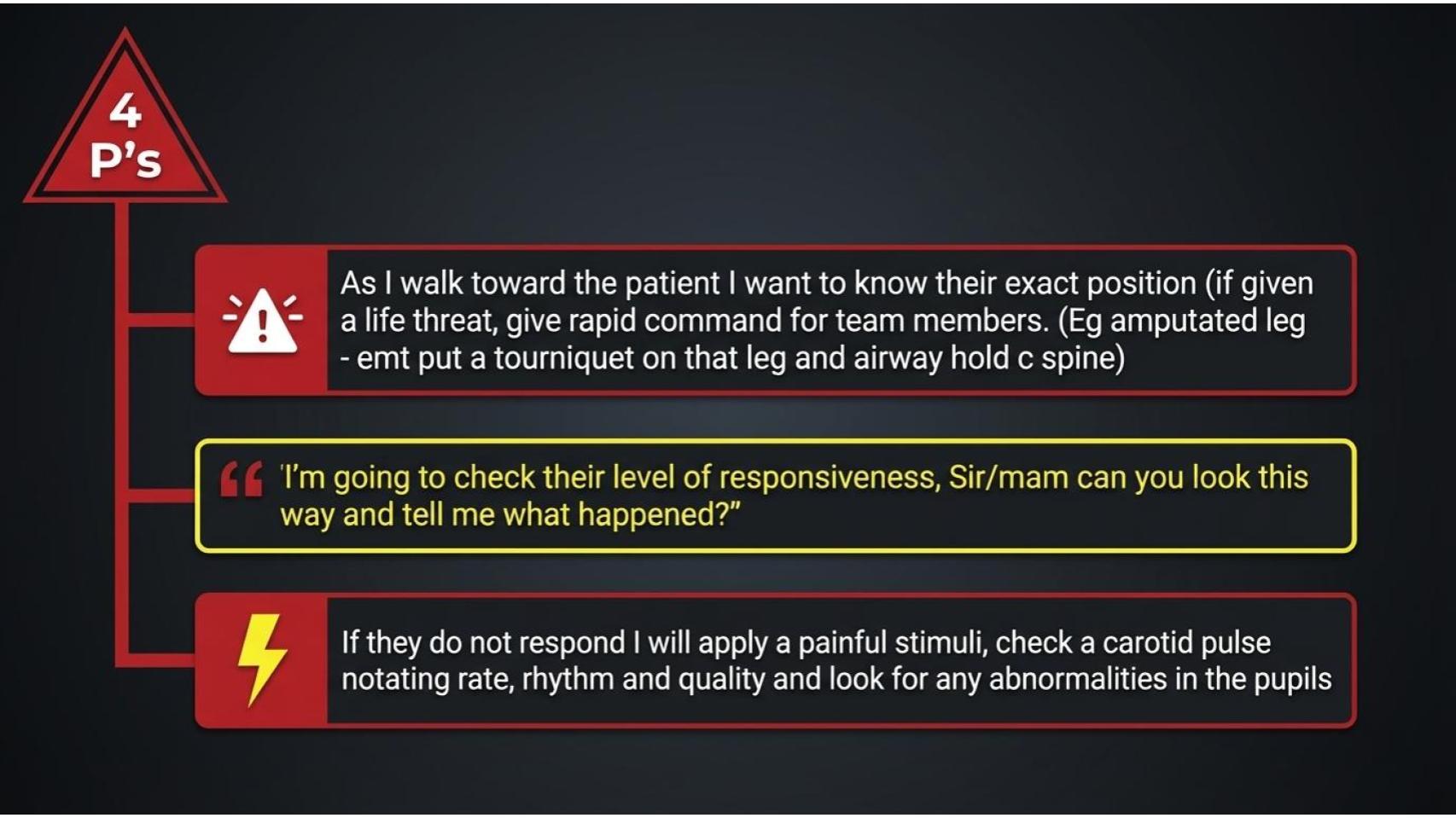
🚨 IF THEY ARE NOT TRACKING YOU...
- Note exact position
- Check responsiveness / painful stimuli
- Carotid pulse only
- Check airway/breathing/asymmetry
- GCS 3 if completely unresponsive
- 3 A's = GCS 3 for unresponsive patients
- Immediately escalate treatment priorities
🚨 Not tracking = altered mental status until proven otherwise. Treat as life threat. Check airway first.
The Triangle Corners
🟡 APPEARANCE (Top)
- Muscle tone — are they upright or limp?
- Interactivity — tracking, responding, playing?
- Consolability — can they be calmed?
- Look/gaze — eye contact, stare?
- Speech/cry — strong, weak, hoarse?
🔵 AIRWAY (Bottom-Left)
- Abnormal sounds — stridor, grunting, gurgling
- Abnormal positioning — tripod, sniffing
- Retractions — intercostal, supraclavicular, sternal
- Nasal flaring
- Apnea
🔴 CIRCULATION (Bottom-Right)
- Pallor — pale, mottled, or ashen skin
- Mottling — irregular bluish-purple discoloration
- Cyanosis — central vs peripheral
- Active hemorrhage visible
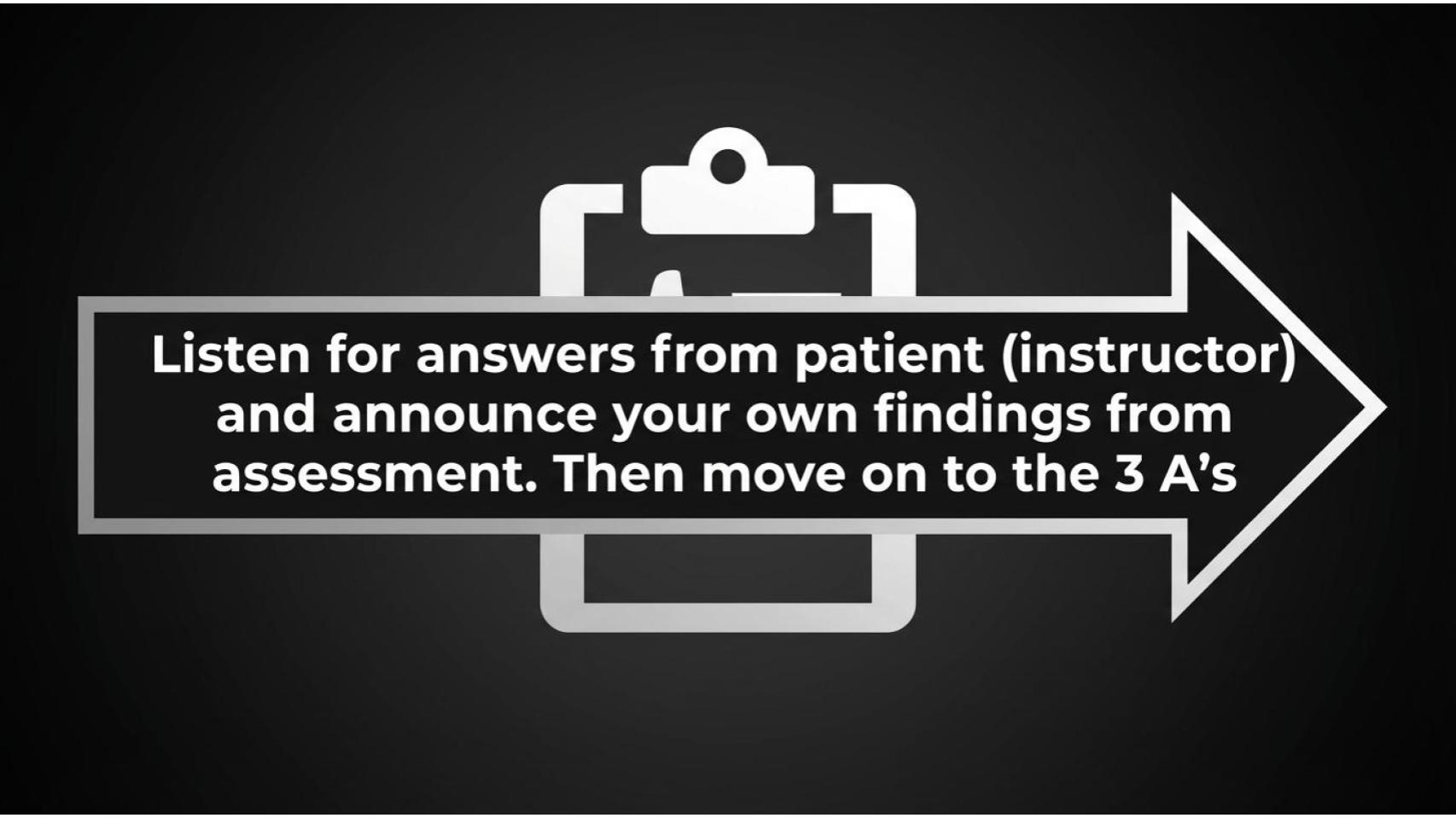
📸 Reference Slides — PAT Assessment Deck
Complete slide deck showing the assessment questions and instructor interactions. All slides are expanded for full reference.